Source inventory
Identify the files, exports, tables, and notes connected to a defined question.
- Source and format list
- Known purpose notes
- Ownership questions
 ALEJANDRO MACHADO
DATA FOLIO / FLORIDA / 01
ALEJANDRO MACHADO DATA SERVICES LLC provides general data services for organizations in Florida. The work can help bring order to source files, field definitions, review questions, and the documents people need for a clear handoff.
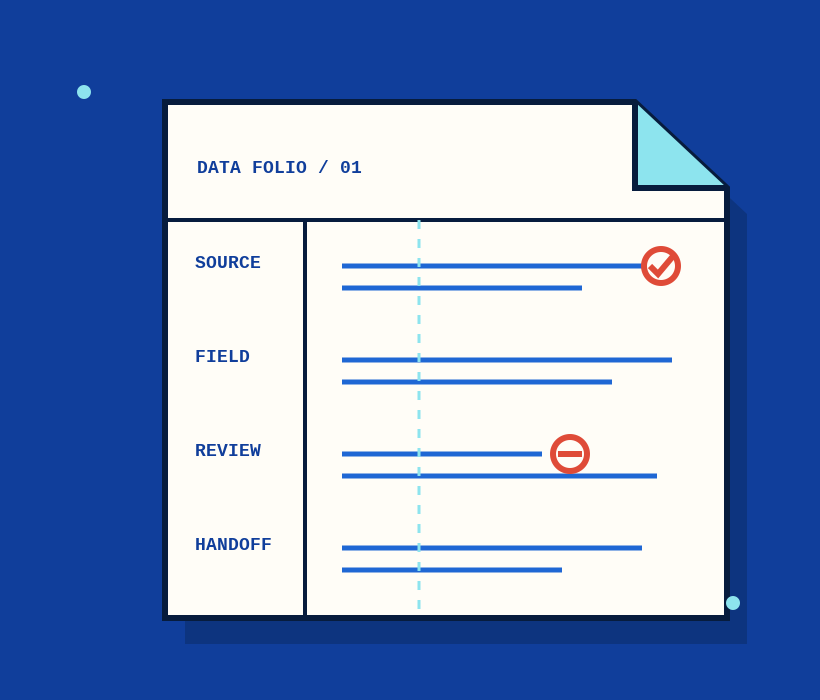
Working folioSource → Definition → Review → Handoff
READING NOTE / 00
First, define the question. Then identify which records relate to it, which terms need agreement, and what a useful result should look like.
This keeps the assignment tied to a real use. It also gives reviewers a clear way to separate source material, agreed changes, and questions that still need an answer.
SERVICE INDEX / SIX AREAS
Each area can be scoped on its own. Inclusions show the kind of working material that may be discussed; they are not fixed packages.
Identify the files, exports, tables, and notes connected to a defined question.
Plan consistent names, groupings, and working conventions for material that has become difficult to follow.
Mark blanks, repeated entries, format differences, and unclear values without deciding by assumption.
Write plain-language references for fields, labels, accepted values, and recurring steps.
Organize the inputs and review points behind a recurring report or internal summary.
Pair organized material with enough context for the next person to understand what changed and what remains open.
INTERACTIVE TRACE / ONE RECORD
Select a folio tab to see what belongs in each part of a documented handoff.
FOLIO A / SOURCE
Record the file, export, table, or note as received. Preserve its name, context, and known use before reorganizing it.
ENGAGEMENT STORY / FIVE CHECKPOINTS
The order matters because later work depends on earlier definitions. A short engagement may still follow the same checkpoints at a smaller scale.
State what is difficult to find, compare, explain, or repeat, and who needs the result.
Identify relevant sources, structures, gaps, and terms without changing the record too early.
Separate observations from decisions. Confirm names, definitions, review logic, and exceptions.
Organize the agreed material and attach documentation that explains the work.
Check the output against its intended use and list anything that remains unresolved.
POSSIBLE OUTPUTS / SCOPE FIRST
An index of reviewed material, formats, purposes, and open ownership questions.
Plain-language field meanings, accepted values, examples, and exceptions.
Observed blanks, duplicates, format differences, and items needing a decision.
A readable account of how information arrives, changes, and moves to its next use.
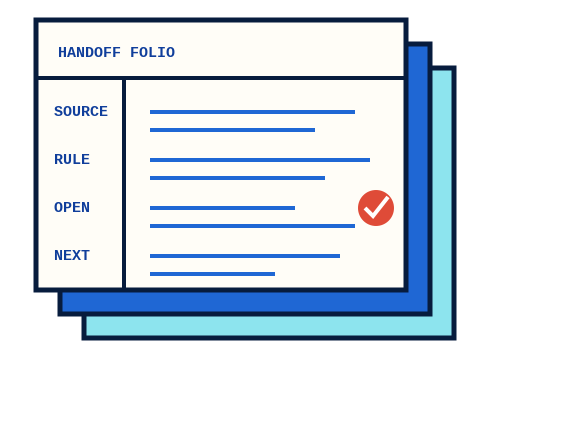
Context, applied rules, meaningful changes, open questions, and next steps.
WORKING STYLE / BOUNDARIES
A first inquiry should describe the need at a general level. Do not put source data, credentials, confidential records, payment details, or personal information into the public form.
Before material is exchanged, the assignment should have a clear purpose, a sensible boundary, and an agreed way to handle what is needed.
Read the working methodMARGIN RULES / FOUR PRINCIPLES
Keep received material distinguishable from organized or revised versions.
Leave a question visible until the right person can decide it.
Attach a plain-language reason to meaningful adjustments.
Use enough structure to support the question without inflating the scope.
REGIONAL CONTEXT
ALEJANDRO MACHADO DATA SERVICES LLC is a Florida company. This site describes broad data organization, review, documentation, reporting preparation, and handoff support without presuming a specific industry, dataset, system, or engagement.
QUESTIONS / EXACTLY FIVE
You can describe a source inventory, organization problem, quality review, definition need, reporting input, or handoff issue at a general level. Fit and scope are discussed separately.
No. A clear question and a description of representative material may be enough to frame a first conversation. Do not send records through the public form.
Yes. A source register, definition sheet, review note, process outline, or handoff brief can be discussed as a focused assignment.
No. The site describes general service areas and a working method. Any scope, output, responsibilities, and timing would need separate agreement.
Describe the kind of information involved, what is hard to use or understand, who needs the result, and what should happen next. Keep sensitive details out.
NEW FOLIO / GENERAL INQUIRY
A short, general description is enough for the first message.
Describe the need